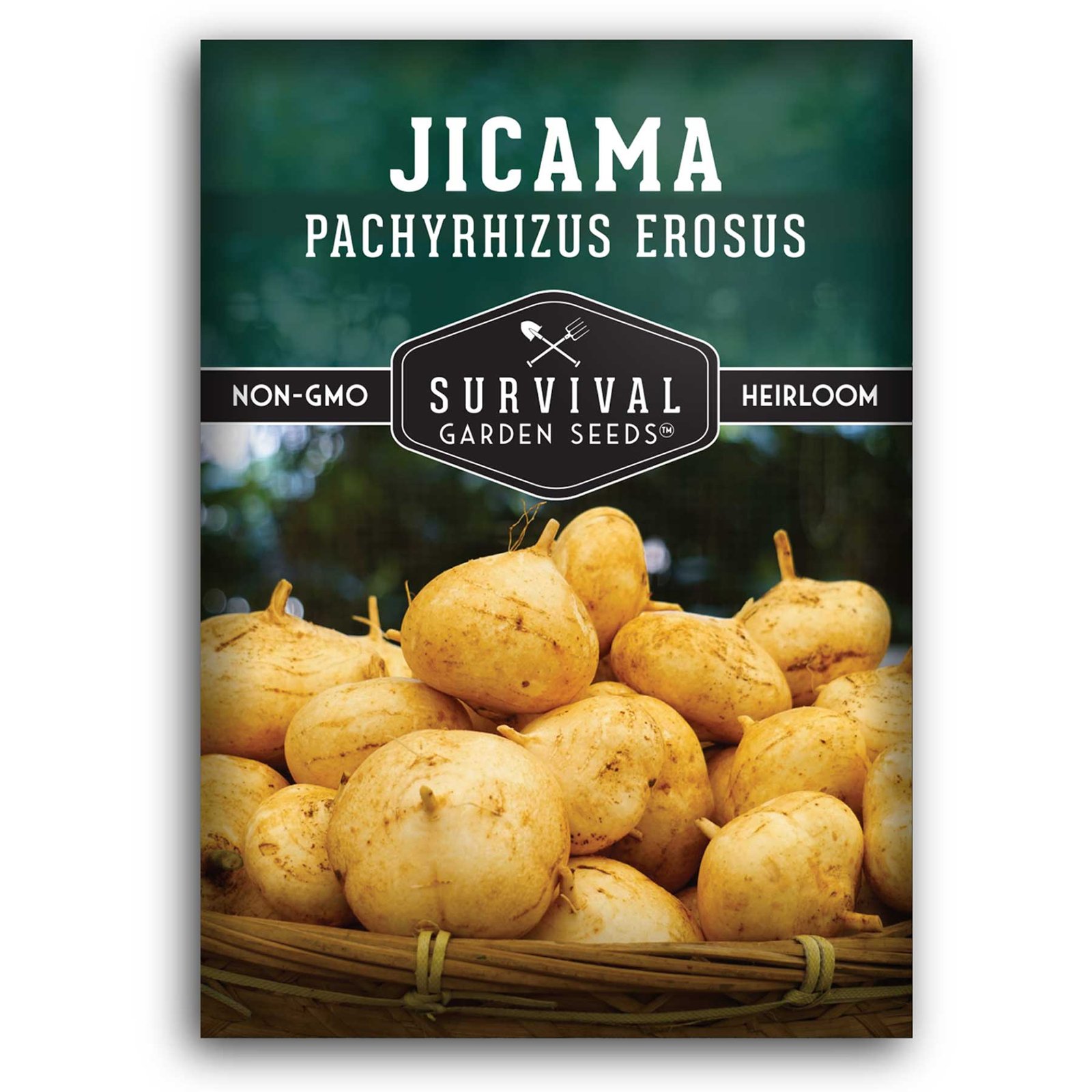
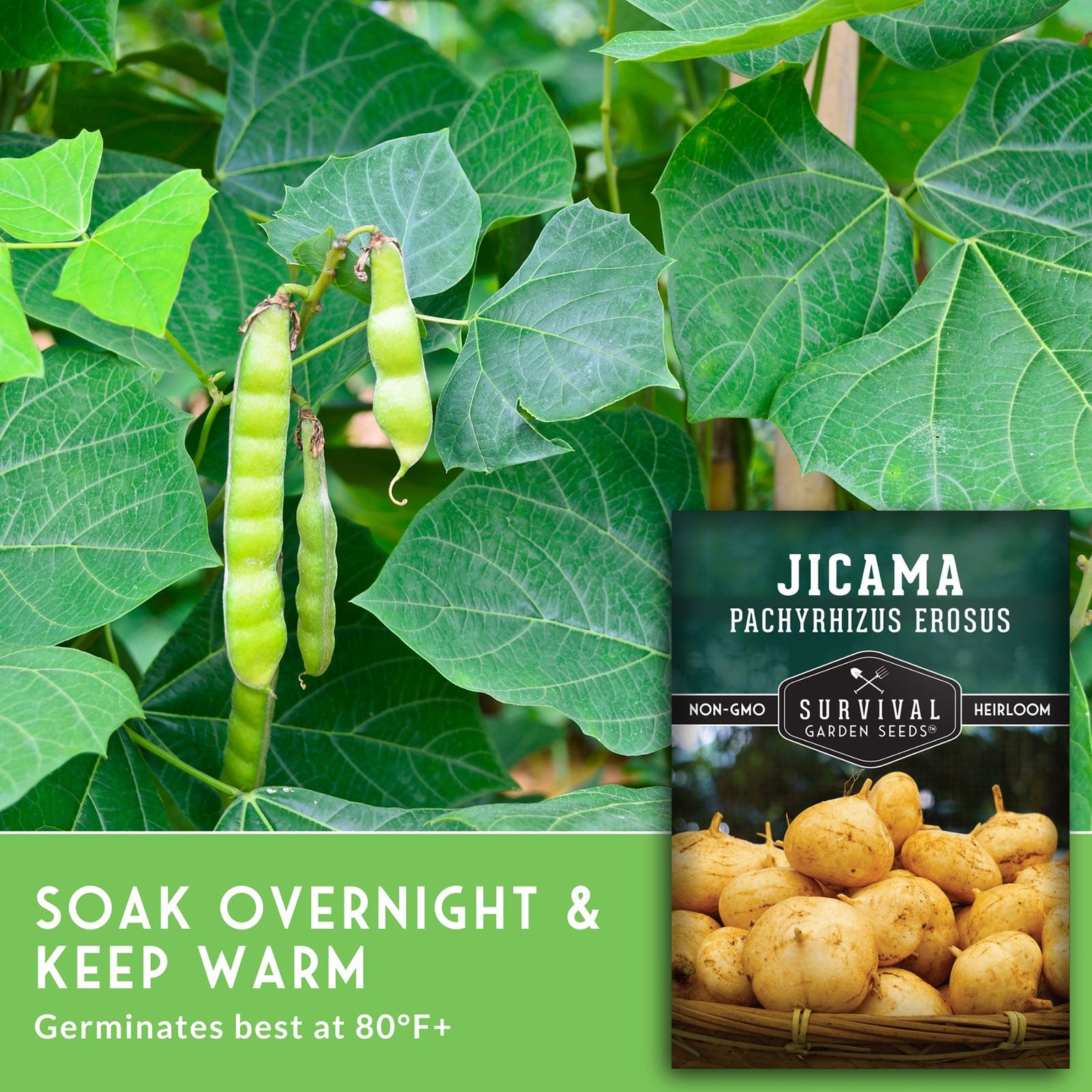
Grow authentic Jicama (Pachyrhizus erosus) at home with heirloom seeds from Survival Garden Seeds. Also called Mexican turnip or yam bean, jicama is a warm-season root vegetable known for its crisp, juicy texture and lightly sweet, nutty flavor. A staple in Latin cuisine, it shines in salads, salsas, fruit cups, tacos, and stir-fries—adding refreshing crunch to a wide range of dishes.
Heat-Loving, Productive, and Ideal for Warm Climates
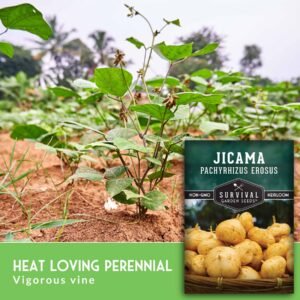
Jicama is a vigorous nitrogen-fixing vine that thrives in full sun and fertile, well-drained soil. This tropical crop requires sustained warmth to germinate and grow well, making it especially rewarding for gardeners who can provide consistent heat. With strong trellising, vines can stretch 15–20 feet and produce multiple large tubers that store beautifully for weeks after harvest.
Key characteristics include:
- Warm-season vines that thrive in hot, sunny conditions
- Crisp, refreshing roots with mild sweetness
- Nitrogen-fixing plants that enrich garden soil
- Drought-tolerant growth once established
- Potential for large yields in long, warm growing seasons
- Versatile culinary use, raw or cooked
Why Customers Love Jicama Seeds
- Produces large, crunchy tubers with excellent storage life
- Adds authentic Latin flavor and texture to homegrown meals
- Offers high yields when grown in a long, warm season
- Suitable for gardeners practicing sustainable, soil-building methods
- Heirloom, non-GMO seeds packed and tested in the USA
- Brings an uncommon but rewarding crop to backyard gardens
How to Grow
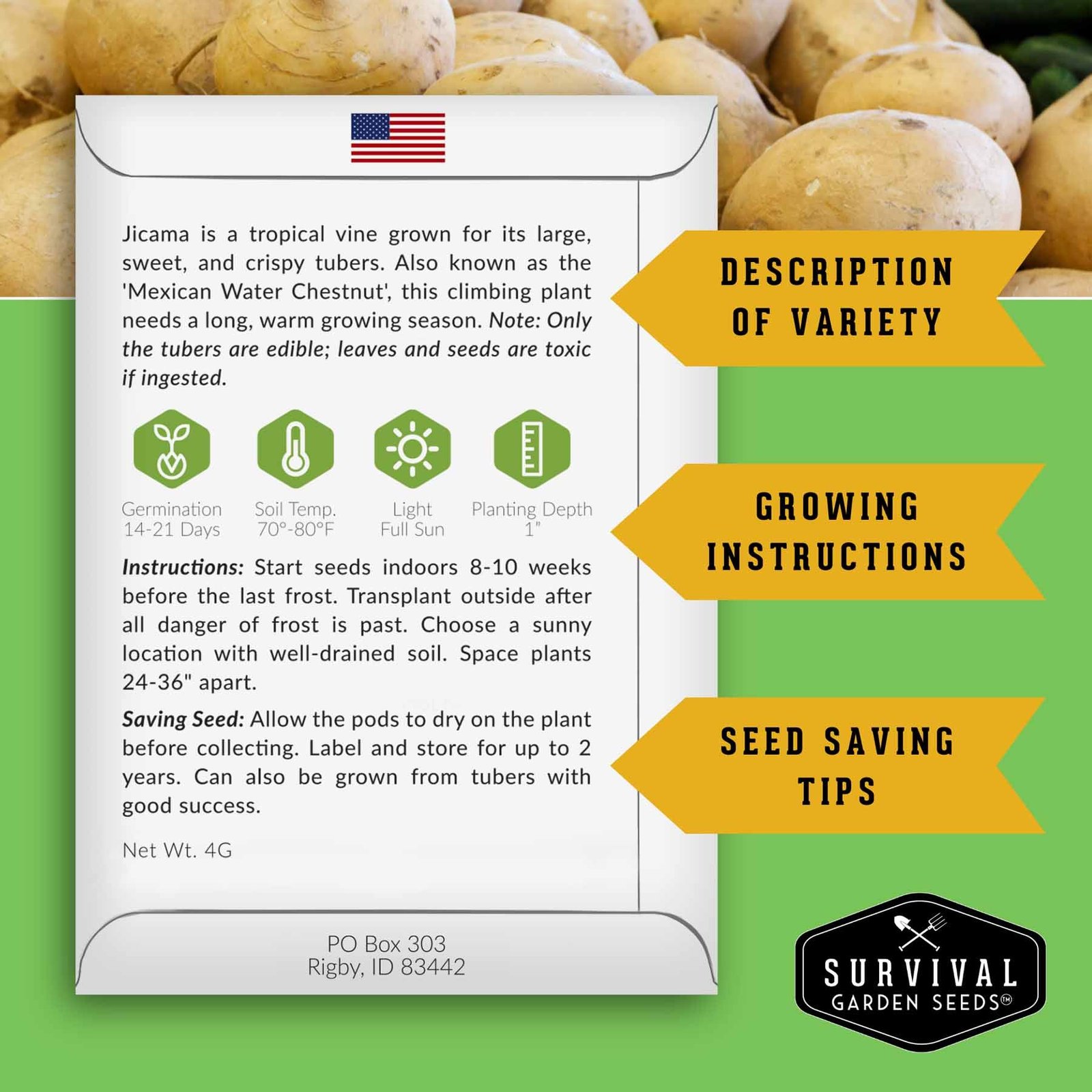
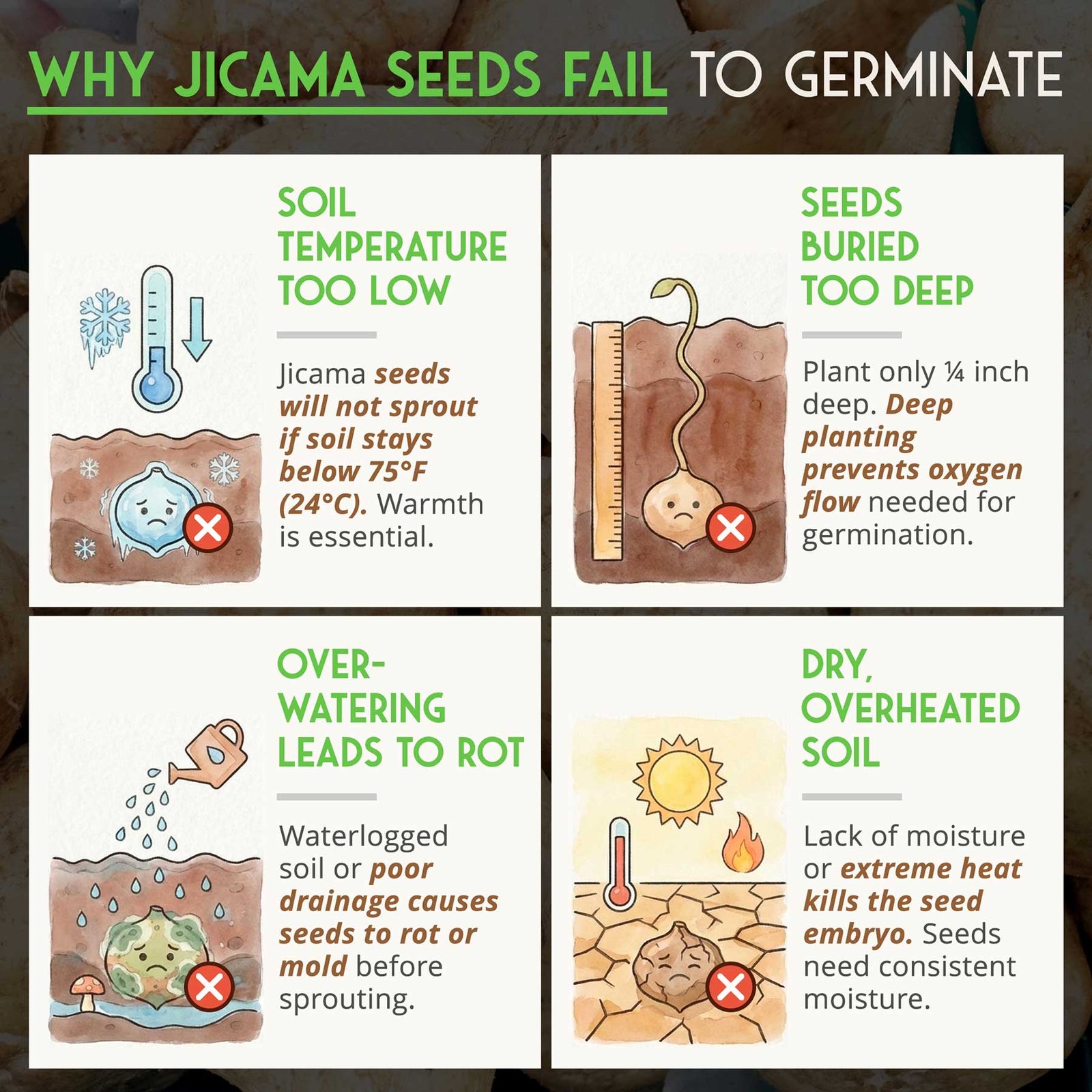
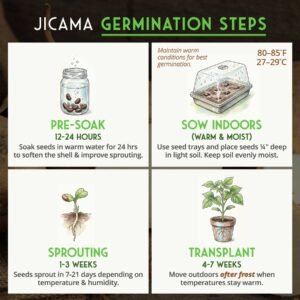
- Jicama requires warmth from the very start.
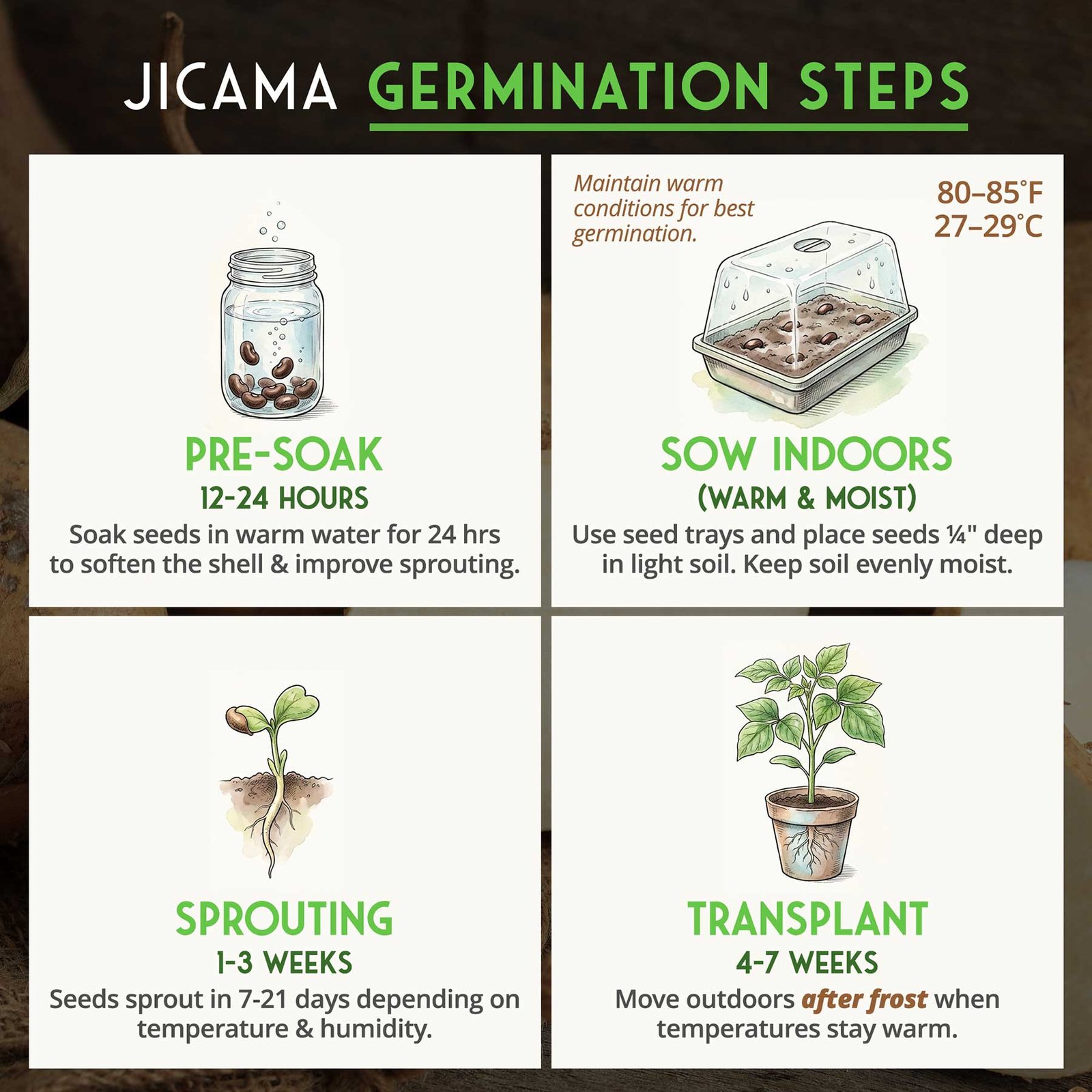
- Soak seeds overnight to encourage faster sprouting.
- Start indoors 6–8 weeks before transplanting. Maintain soil warmth of 80–90°F using a heat mat if needed.
- Transplant outdoors only after both air and soil are thoroughly warm.
- Provide a sturdy trellis or fence for the vines, which can reach 15–20 feet.
- Water regularly during establishment; mature plants show good drought tolerance.
- Harvest tubers when vines begin to naturally yellow at the end of the season.
Harvest & Use
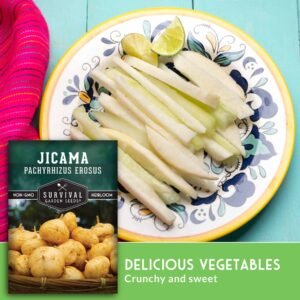
Trim vines back when they begin to decline, then lift the tubers carefully. Store harvested jicama in a cool, dry place; roots keep well for extended periods. Enjoy them fresh in salads and fruit cups, or roast, sauté, or stir-fry for a slightly sweeter cooked flavor.
NET WT. 4 G












 Jicama Seeds for Planting – Pa...


Reviews
There are no reviews yet.